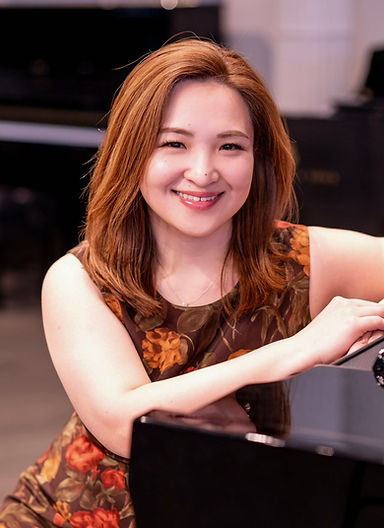
MAI MIZUNO


Artistry isn’t something that suddenly becomes available when you reach a certain level or start playing difficult repertoire.
It’s in the decisions you make about a phrase. The sound you’re trying to create. What you want to express. What you want to communicate to the listener. Where the music is going—and whether what comes out of the piano actually matches what you imagined.
Sometimes you know exactly what you want to say, but you’re not sure how to make it come through in your playing.
Sometimes you know something isn’t quite working, but you can’t identify why.
And sometimes you’ve lived with a piece for so long that you simply need another pair of ears.
That’s what this coaching is for.
How It Works
01 — We start with a conversation.
We’ll begin with a complimentary 15-minute consultation to talk about your playing, what you’re working on, and what you’d like help with.
We’ll also decide together what repertoire or section makes the most sense for us to focus on.
02 — You send me your playing.
You’ll send me a recording of the music we’ve agreed on, along with any questions or concerns you’d like me to consider.
It does not need to be polished or performance-ready. I want to hear where your playing is right now.
03 — I listen before we meet.
I’ll carefully review your recording and prepare written notes for you to keep.
I’ll consider the things you’re already hearing and wondering about, while also listening for things you may not have noticed yet.
Doing this work ahead of time means that when we meet, we don’t have to spend the beginning of the session figuring out what’s happening. We can spend our time actually working at the piano.
04 — Then we explore it together.
We’ll meet for a 60-minute private online coaching session.
I may demonstrate. You try something. We listen. We adjust. You play it again.
Depending on what we discover, we might talk about sound, technique, movement, phrasing, interpretation, practice—or something I couldn’t possibly predict before hearing you.
That’s part of what I like about teaching. Every pianist is different.
You’re also welcome to record the session for your own personal use.
ARTISTRY IS A DECISION.
NOT A LEVEL.
You might be playing a Sonatina.
You might be playing a Chopin Ballade.
You might be preparing for a performance, studying regularly with another teacher, returning to the piano after many years, or simply working on a piece because you love it.
I’m much less interested in how “advanced” your repertoire is than in what you’re trying to do with it.
Where is the phrase going?
What kind of sound are you looking for?
What do you want someone to feel when they hear it?
Can you hear the difference between what you intended and what actually came out of the piano?
Those questions don’t suddenly become relevant when you reach a certain level. They are part of making music from the beginning.
You can play a Sonatina like an artist.
There is still no shortcut to becoming one.
WHO THIS IS FOR
This coaching is for pianists who can already learn music independently and want to discover more in their playing.
You don’t need to be a professional.
You don’t need to be playing particularly difficult repertoire.
But you should care about the music.
You should be curious enough to ask questions, open to hearing honest feedback, and willing to experiment when we find something worth exploring.
Maybe you already know exactly what you want to say and need help figuring out how to make it happen.
Maybe you’re not sure what you want yet.
Both are interesting places to start.

Already have a teacher?
That’s completely okay. This coaching isn’t intended to replace your regular teacher. Sometimes another set of ears can simply offer a different perspective, question, or way of approaching the music.
I’m happy to work alongside that relationship—not replace it.
WHAT I HOPE YOU LEAVE WITH
The goal isn’t to “fix” your entire piece in one hour.
I want you to leave hearing your own playing differently.
Maybe we find a technical solution that suddenly changes a passage.
Maybe you discover a sound you hadn’t considered.
Maybe something that has bothered you for weeks finally makes sense.
Or maybe you leave with a completely new question.
I want you to understand not only what we changed, but what you can listen for when you return to the piano on your own.
Because to me, becoming a better pianist should make your musical world bigger, not smaller.
More sounds to notice.
More choices to make.
More questions to ask.
More possibilities to explore.
And hopefully, a little more reason to want to sit down at the piano again.
About
Hi, I’m Mai.
I’m a classical pianist and teacher based in Plano, Texas.
I started playing piano when I was three, and somehow I’m still finding things to be curious about thirty years later.
I hold three degrees in piano performance, including a Doctor of Musical Arts, and I’ve been teaching for almost fifteen years. I perform, collaborate with other musicians, adjudicate, teach my private studio, and—yes—still practice.
I think that matters.
I can only teach from what I know, and a huge part of what I know comes from continuing to sit at the piano myself: trying to create a sound, solving a technical problem, questioning an interpretation, changing my mind, and occasionally wondering why something that worked perfectly yesterday has decided not to work today.
I don’t think there is one correct path to becoming a musician.
But I do believe in listening carefully, staying curious, doing the work, and taking the music seriously without taking all the joy out of it.
That’s the kind of work I like doing with other pianists.